

On November 14-17, the first International Symposium on phase separation and phase change (ispt-2019), sponsored by the Chinese society of Biophysics and hosted by the school of life sciences of the University of science and technology of China and the Institute of biophysics of the Chinese Academy of Sciences, was successfully held in Hefei, Anhui Province. More than 350 students from China, the United States, Germany, the Netherlands and Belgium attended the symposium Experts and scholars in the field of phase separation and phase transformation attended the meeting. Professor Du Jiangfeng, academician of the Chinese Academy of Sciences, member of the Standing Committee of the CPC Committee and vice president of the University of science and technology of China, Professor Shi Yunyu, academician of the Chinese Academy of Sciences and Professor Zhou congzhao, assistant to the president of the University of science and technology of China, Professor Hou Zhonghuai, deputy director of the micro scale national research center of the University of science and technology of China, and key points of the Ministry of education of non membrane organelles and cell dynamics Professor Yao Xuebiao, director of the laboratory, and Zhang Hong, researcher of China Institute of Biophysics, Secretary General of China Society of Biophysics, attended the opening ceremony of the conference, which was presided over by Ruan Ke, associate professor, School of life, University of science and technology of China.
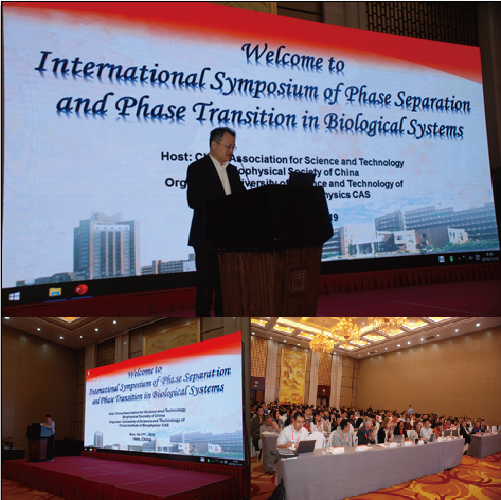
Vice President Du Jiangfeng delivered a welcome speech on behalf of the host university of science and technology of China. He pointed out that phase transformation and phase separation in biological system are the current international frontier research hotspot, and are the emerging research fields of deep integration and intersection of biology, physics, chemistry and materials. It is hoped that this meeting will build an ideal platform for experts to exchange and learn, and provide opportunities for different academic ideas to collide and blend. Vice President Du Jiangfeng also briefed the experts and scholars who attended the meeting on the school running policy of "running a school in the whole institute, combining departments" which was always adhered to by the University of science and technology of China, and the school running direction of cultivating new, marginal and interdisciplinary top-notch scientific and technological talents with high starting point and wide caliber closely around the strategic needs of the country, as well as the school's recent development in quantum information, nanotechnology and high temperature superconductivity , voice processing, fire science, life science and other fields have achieved a number of original scientific and technological achievements with the world's leading level. In his speech, researcher Zhang Hong introduced the purpose and significance of holding this seminar, and briefly described the preparation of the biological phase separation and phase change branch of the Chinese society of Biophysics, as well as the selection process and method of the candidate directors of the first Council.
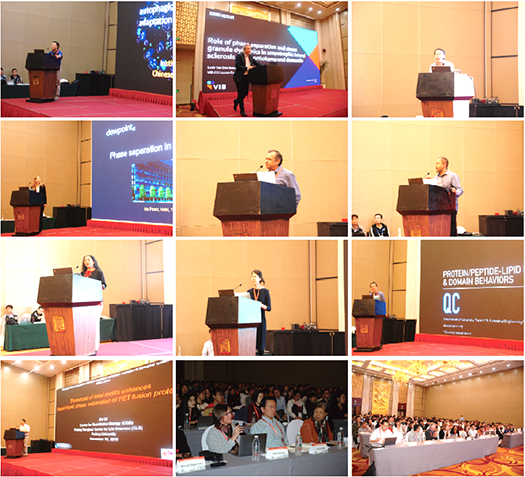
In order to elucidate the formation process, existing material state, recognition mechanism and dynamic remodeling mechanism in response to the change of microenvironment, Professor HHMI Abby dernburg, University of Wisconsin anjon audhya and Arun yeth were invited Professor iraj, Ludo van den Bosch, Ludo University, Belgium, Professor manajit hayer Hartl, assistant director of Max Planck Institute of Biochemistry, researcher ina poser, Max Planck Institute of cell research, Professor Rolf boeles, Utrecht University, Netherlands, Professor Qian Cui, Boston University, USA, Professor Huan Xiang Zhou, University of Illinois, Chicago, USA, Professor Jane y. Wu, Northwestern University, USA, etc Well known foreign experts attended the meeting. The conference lasted for 4 days, with 9 special reports and 25 oral reports. The conference will focus on the basic principles of biological phase change and phase separation, driving force and physicochemical properties of biological phase change and phase separation, research methods of protein liquid-liquid phase separation biochemistry and cell biology, application of structural biology and Materials Science in liquid-liquid phase separation, biological phase change and phase separation in nervous system, protein-protein interaction in biological phase change and phase separation system The latest progress and core contents in the fields of multi-scale calculation and analysis of action, phase separation and disease in cells, and drug discovery in biological phase transformation and phase separation were discussed and exchanged.
Before the report of the conference, technical training on phase transformation and phase separation was also held. Experts and scholars from the Institute of Biophysics, the Chinese Academy of Sciences, Peking University and Tsinghua university trained more than 300 teachers and students on the preparation of phase change and phase separation experimental samples, system determination, in vivo and in vitro research methods, and the construction of in vitro liquid-liquid phase separation protein database, providing guidance for the standardization and standardized operation of phase change and phase separation experiments 。 The atmosphere was warm and interactive. The training has achieved very good results and won unanimous praise from the participants.
During the meeting, the first Council of the biological phase separation and phase transformation branch and branch of China biophysics society were also elected. At the first council meeting held subsequently, researcher Zhang Hong was elected as the president of the society, academician Zhang Mingjie was elected as the honorary president, Professor Yao Xuebiao, Professor He Yan and Professor Li pilong were elected as the vice president, and vice professor Ruan Ke was elected as the Secretary General. At the meeting, it was proposed to standardize the experimental operation and database management of biological phase transformation and phase separation, and form a research system and theoretical paradigm of membrane-free organelles with Chinese characteristics.
Professor manajit hayer Hartl of Mapu Institute of Biochemistry also visited the Key Laboratory of membrane-free organelles and cell dynamics of the Ministry of education and reached an agreement on bilateral cooperation by using the meeting space, and invited colleagues of the laboratory to visit Mapu Institute of biochemistry in February 2020. Researcher ina poser of Mapu cell research institute visited the Key Laboratory of membrane-free organelle and cell dynamics of the Ministry of education on the cooperation project of membrane-free organelle chemistry and biology, and made a specific implementation plan on the construction of high-content screening platform.
This meeting deepened the cooperation and exchange between experts and scholars in the field of biological phase separation and phase change between China and Europe and the United States, promoted the understanding and interaction between domestic universities and research institutes, and provided a good platform for everyone to learn from each other and expand their cooperation. The successful holding of the symposium is of great significance to further improve the research level and international status of the discipline of biological phase separation and phase change in China. The conference was strongly supported by China Association of science and technology, China Society of Biophysics, microscale National Research Center of University of science and technology of China, and international cooperation and Exchange Department of University of science and technology of China.
(College of life sciences, Key Laboratory of non membrane organelles and cell dynamics, Ministry of Education)